What's actually inside
A closer look at what each book covers, place by place.
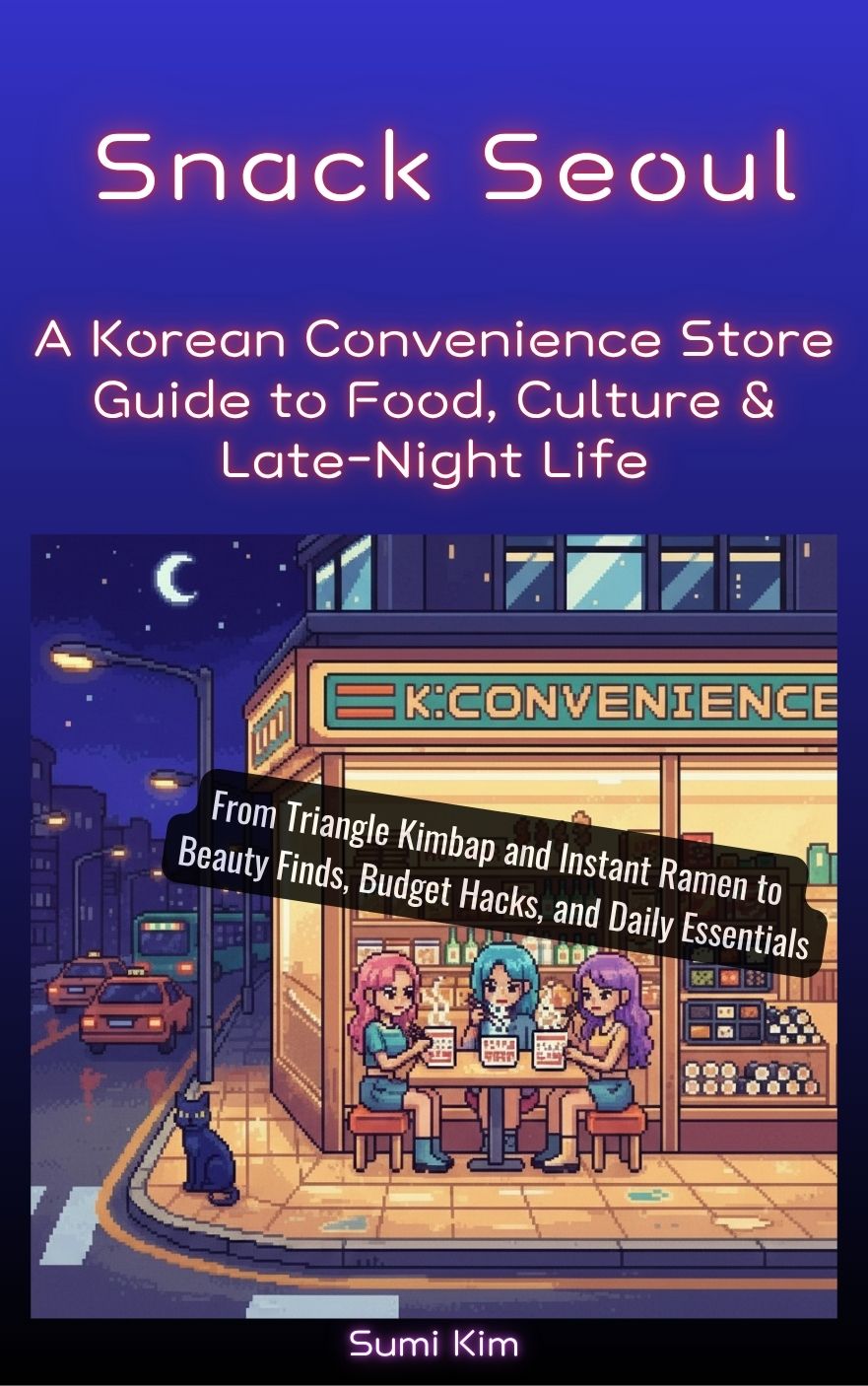
Snack Seoul
Why does every traveler end up in a Korean convenience store at 2am?
Because Korea's convenience stores aren't convenience stores — they're 24-hour micro-cities with hot meals, seating, and private-brand snacks that sell out like limited-edition sneakers. CU, GS25, 7-Eleven, and emart24 each run their own PB line (PBICK, YOUUS, 7-SELECT, I'm e), and the differences matter: the same-looking triangle kimbap costs and tastes different depending on which sign you walk under. This book is the map.
What's inside:
- Which PB brand belongs to which chain — CU (PBICK, GET Coffee, CUBAR), GS25 (YOUUS), 7-Eleven (7-SELECT), emart24 (I'm e) — and what each does best
- 7 convenience stores worth visiting as destinations, including CU Hongdae's "Ramen Library" with 200+ instant noodles
- How 1+1 and 2+1 promotions work, and how to spot them
- What you can buy besides snacks: OTC medicine, K-beauty sheet masks, phone chargers, SIM cards
- Korean vs. Western convenience stores: 24-hour hot meals, in-store dining, and why CVS and Tesco Express don't compare
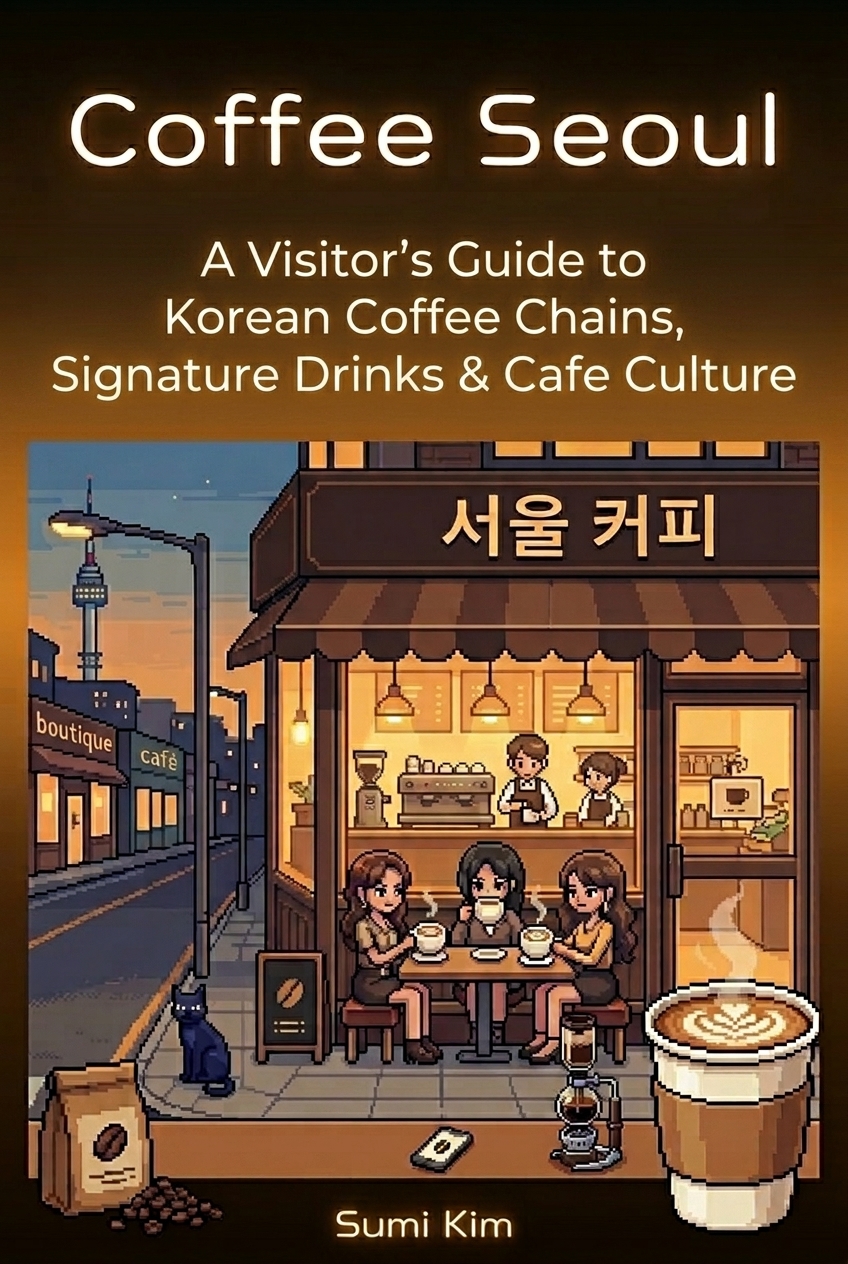
Coffee Seoul
How can an Americano cost $1 at one café and $6 at the one next door?
South Korea drinks more coffee per person than almost any country on earth — 405–512 cups a year against a global average of 152 — and Seoul has entire blocks with five chains within a two-minute walk. Mega Coffee (3,420 stores), Compose (2,649), Paik's (1,865), Starbucks Korea (2,009): each has a price tier, a signature drink, and a reason to exist. This book tells you which one to walk into, and what to order when you get there.
What's inside:
- Budget chains vs. premium chains, with store counts, starting prices, and tiers (Mega, Compose, Paik's / Ediya, Twosome, Hollys, Paul Bassett, Starbucks)
- What "아아" (iced Americano) and "아샷추" (peach iced tea + espresso) mean, and why Koreans order iced coffee in winter
- Paik's Coffee's 22-oz Americano and the Baek Jong-won story (Netflix's Culinary Class Wars)
- Flagship stores worth a detour: Paul Bassett Hannam (6 floors), Ediya Royal Marina Hangang, Twosome 2.0 Gangnam, Starbucks Korea's most spectacular locations
- How to order at a touch-screen kiosk, takeout vs. dine-in etiquette, and the top 5 mistakes tourists make
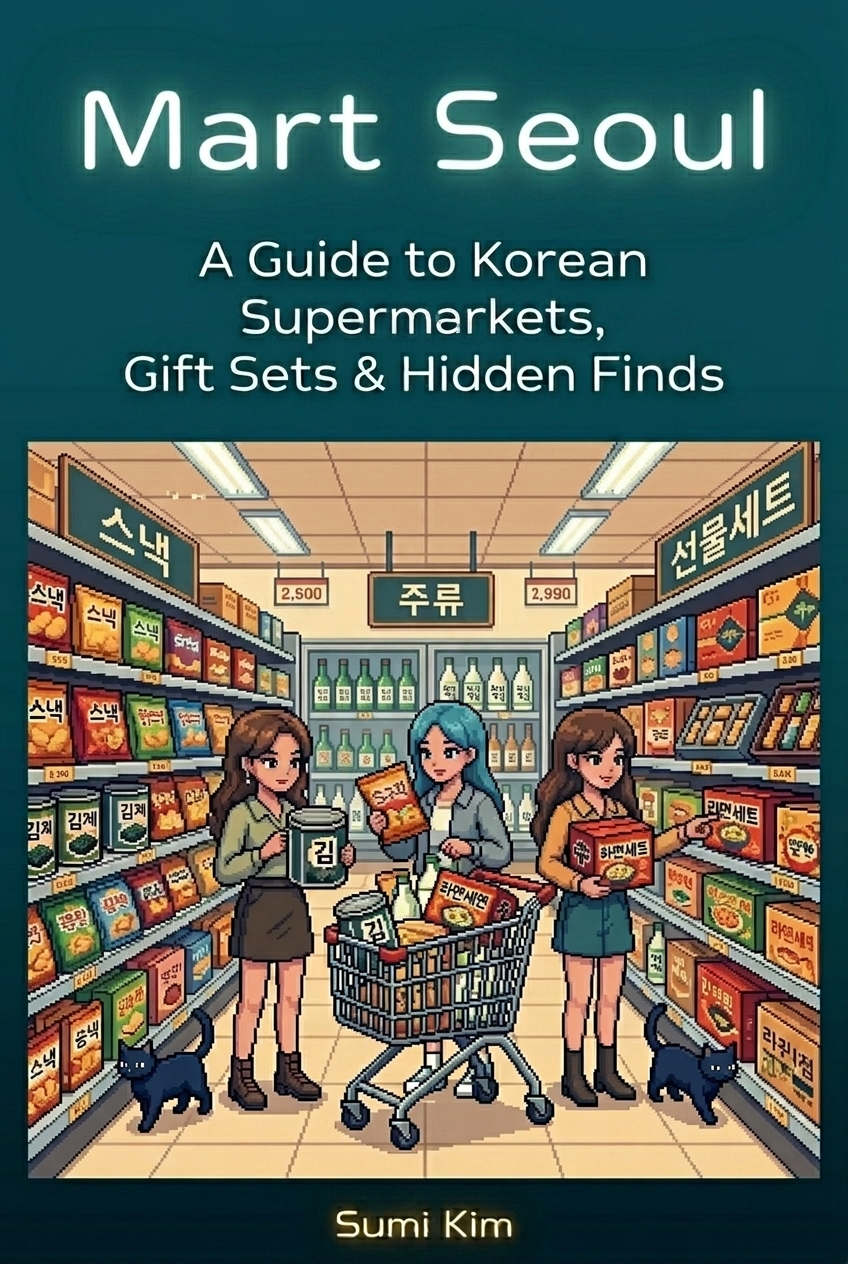
Mart Seoul
Why is there no big supermarket in Myeongdong?
Because Korean marts cluster around transit hubs, not tourist streets — and the best one for travelers sits under Seoul Station, where you can check your luggage for Incheon, then shop with two free hands. Over half of that store's sales come from foreign visitors. This book covers the four marts worth the subway ride, what to bring home, and how to get your VAT back.
What's inside:
- "Where to shop by where you are today" — the nearest mart from Myeongdong, Hongdae, Gangnam, Jamsil, Itaewon, with subway times
- Lotte Mart Zettaplex Seoul Station and the City Airport Terminal trick (check in first, shop after)
- What to buy: HBAF almonds at mart prices, gim (seasoned seaweed) tins, makgeolli (생 vs. regular), vacuum-packed kimchi, ramyeon
- Mart-only PB brands: Emart's No Brand (40–50% cheaper), Jaju skincare vs. Olive Young, Lotte's Only One, Peacock
- Seasonal finds by month (strawberry in spring, Pepero Day in November, Chuseok/Seollal gift sets) and VAT refund rules (min ₩15,000, passport required)
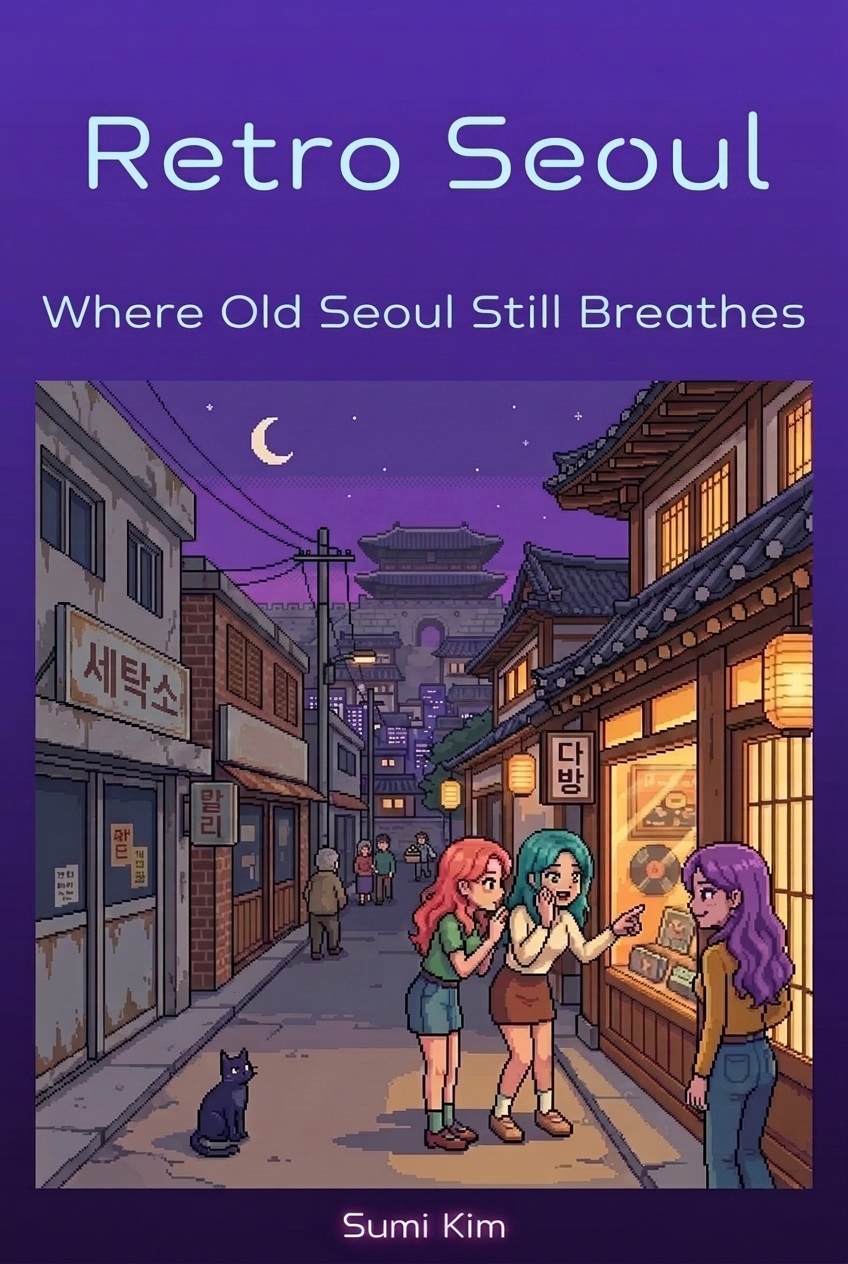
Retro Seoul
Why is a 1968 "megastructure" still standing in the middle of Seoul?
Because in Seoul, old buildings survive by accident far more often than by design. Sewoon Sangga, Korea's first large-scale mixed-use complex, opened in 1968 as a "city within a city" — apartments, shops, cinemas, and a rooftop garden under one roof. The city announced plans to demolish it in 2003 as part of the Cheonggyecheon restoration; the plan stalled, a new mayor arrived, it stalled again, and the building never came down. This book covers five neighborhoods that survived the same way — not preserved by policy, but too tangled in ownership, too embedded in supply chains, or too politically contested to tear down.
What's inside:
- Jongno (종로, "Bell Street") — over 600 years as Seoul's main commercial street, still lined with a gold jewellery district priced by the gram, steps from Jongmyo Shrine, the Joseon royal ancestral shrine and UNESCO World Heritage site
- Ikseon-dong's hanok, built in the 1920s–30s, survived because they were too small and too numerous to redevelop profitably — not because anyone set out to save them
- Nakwon Arcade, built in 1969 — one of the largest concentrations of music instrument shops in Asia, hidden behind the facade of an ordinary 1970s commercial block
- Euljiro's Tool Street (공구거리, 500+ hardware and tool shops) and Cheonggyecheon, the stream covered over in 1958, buried under an elevated highway for decades, then restored as a 5.84km park in 2005
- Sewoon Sangga's electronics floors and in-house museum on Korean electronics history, plus Seochon — the "West Village" once home to King Sejong, painter Jeong Seon, and poet Yun Dong-ju
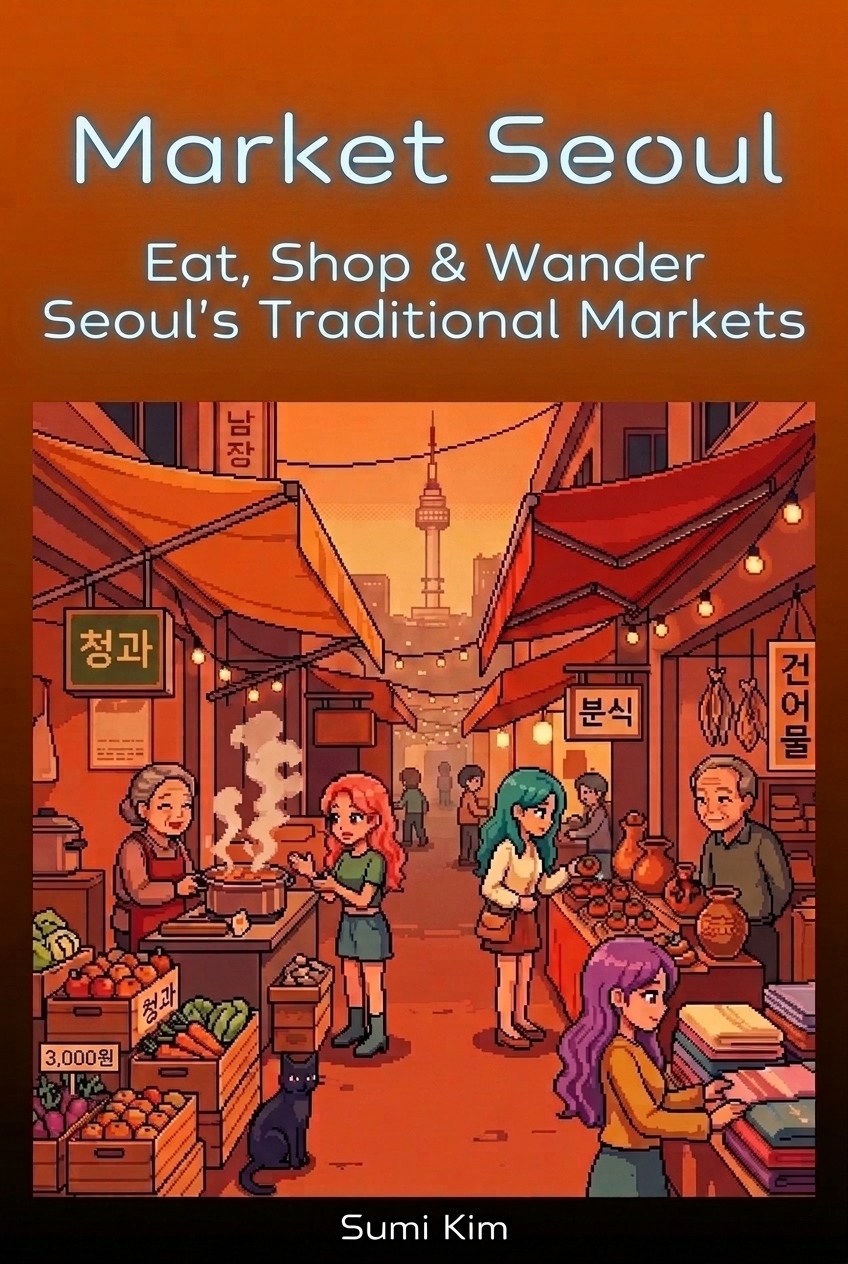
Market Seoul
Is Gwangjang Market still worth it after Netflix?
Yes — if you go on a weekday between 10 and 11am and walk two rows past the entrance, where the same bindaetteok is cheaper. Seoul's traditional markets are 600-year-old commercial districts that survived supermarkets by offering what algorithms can't: prices that move, goods you can touch, and stalls run by the same family for three generations. This book covers seven of them, each with a different reason to go.
What's inside:
- 7 markets at a glance: Namdaemun, Dongdaemun, Tongin, Gwangjang, Dongmyo, Hwanghak-dong, Sindang — type, best-for, nearest station
- Gwangjang's essential food list (bindaetteok, mayak kimbap, yukhoe, sundae) with spice levels, and the upstairs fabric and vintage hanbok floor most visitors miss
- Tongin Market's yeopjeon (엽전) coin lunchbox and the Seochon half-day walk
- Haggling rules (flea markets yes, food markets no), cash vs. card, and which entrances are quieter
- Namdaemun's 600-year history, 10,000 stalls, and how to walk it with a plan
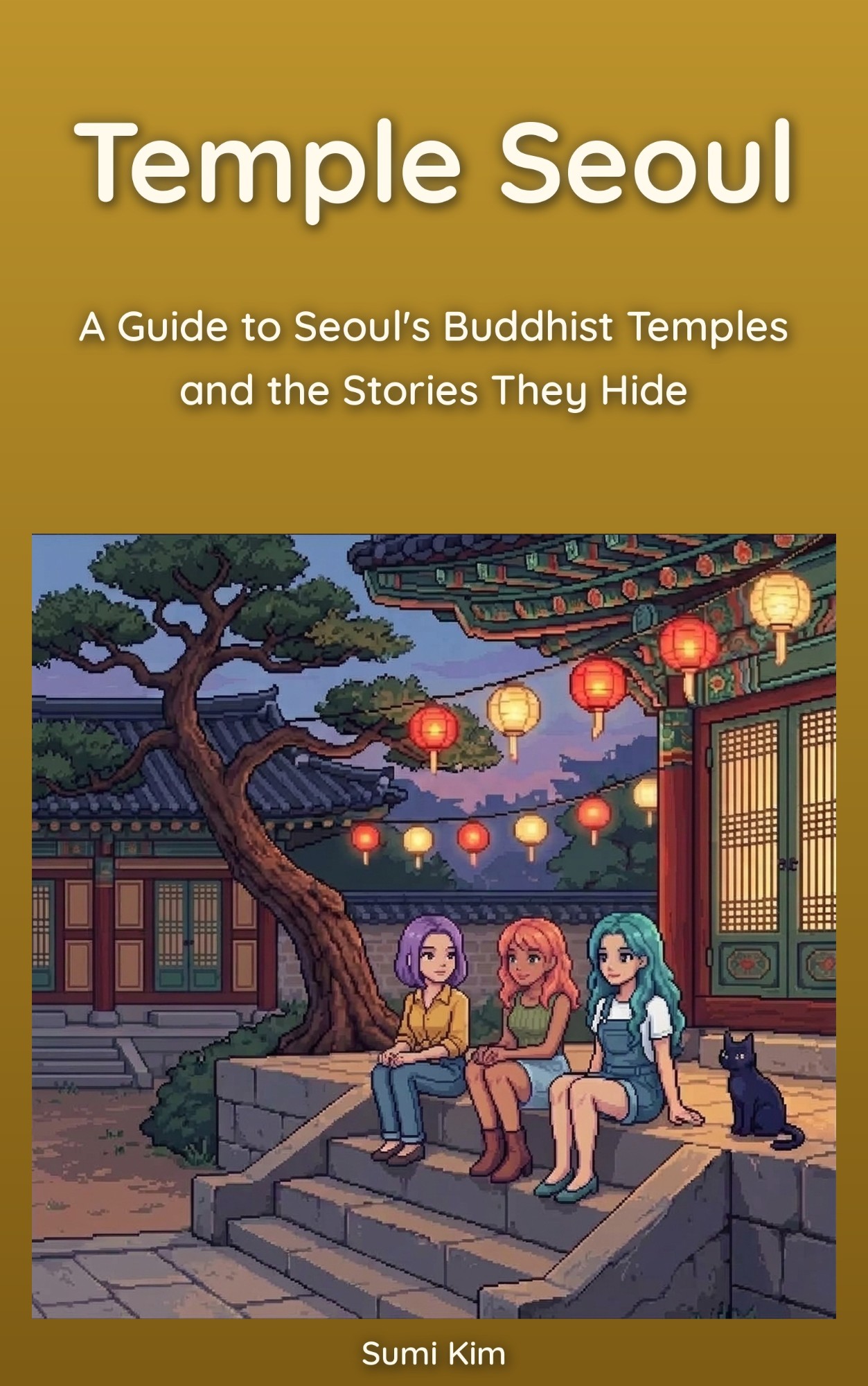
Temple Seoul
Why is there a 1,200-year-old temple across the street from COEX?
Because Bongeunsa was here first — founded in 794, rebuilt in 1498 to guard a king's tomb, and still standing a hundred meters from a Line 9 exit in the middle of Gangnam. This book covers ten of Seoul's Buddhist temples, the etiquette that makes a visit feel comfortable instead of awkward, and the specific histories most guidebooks skip.
What's inside:
- Bongeunsa (봉은사)'s full history and the Panjeon hall's Kim Jeong-hui (추사) signboard, written shortly before his death
- 10 temples at a glance: 4 reachable by subway (Jogyesa, Bongeunsa, Gilsangsa, Heungcheonsa), 6 connected to Seoul's mountains
- 6 etiquette rules and 5 words to know before your first visit — shoes, side doors, and what 해우소 actually means
- Temple stay (템플스테이) programs, and which temples offer them
- A Korean flag hidden inside a shrine for ninety years, and other stories most guidebooks skip