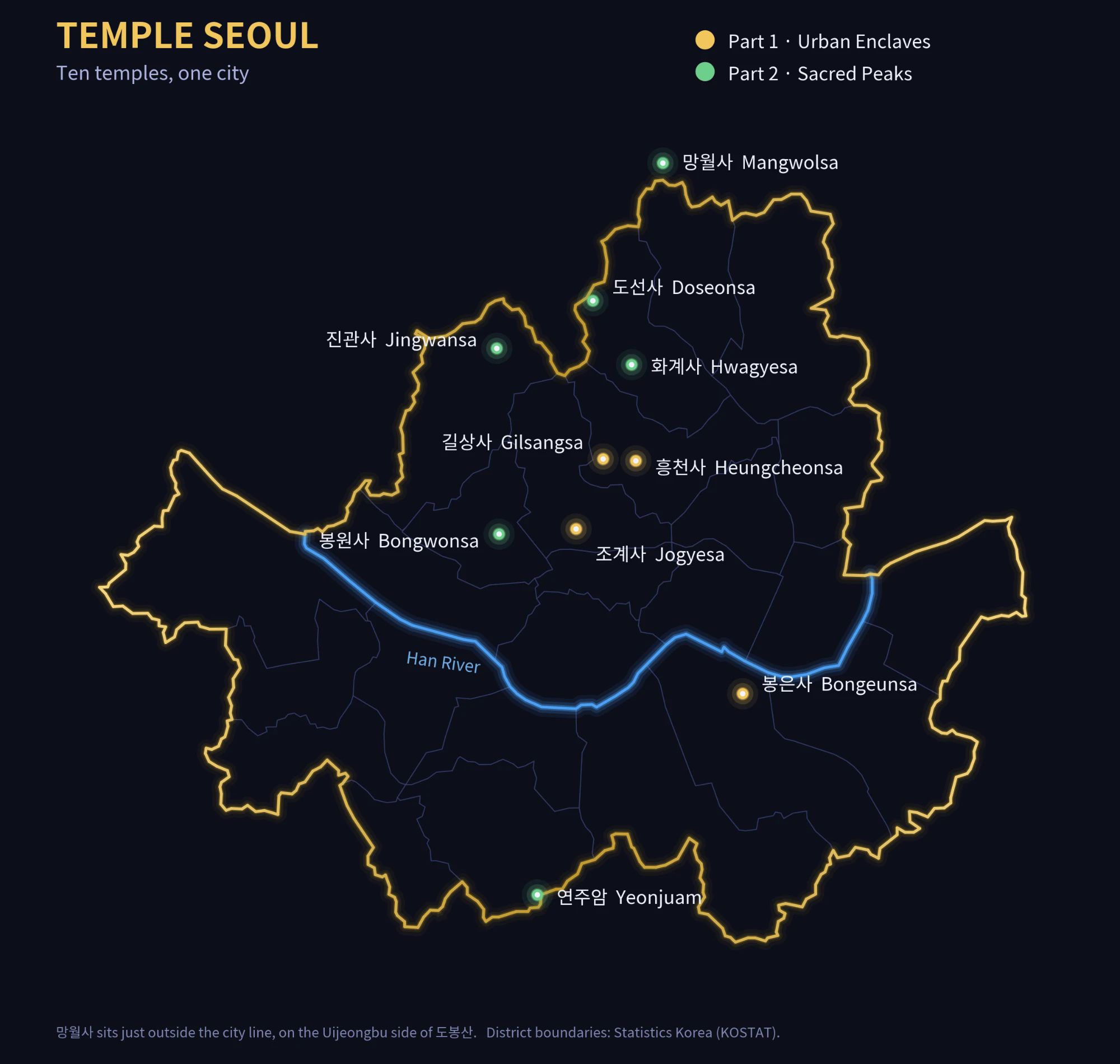
Four are an easy subway ride from downtown — 조계사(Jogyesa), 봉은사(Bongeunsa), 길상사(Gilsangsa), and 흥천사(Heungcheonsa). The other six are tied to Seoul's mountains and reward more effort — 진관사(Jingwansa), 도선사(Doseonsa), 화계사(Hwagyesa), 봉원사(Bongwonsa), 망월사(Mangwolsa), and 연주암(Yeonjuam).
That split matters more than it sounds. The four downtown temples work as standalone half-day trips — walk in from a subway exit, look around, walk out. The six mountain temples ask more of you: a bus transfer, a trailhead, sometimes a real hike. None of that makes them less worth visiting — it just means you plan for them differently. Before you go, it's worth a quick read of Korean temple etiquette, since the basics (which door to use, when to bow) are the same at all ten.
4 temples you can reach by subway
| Temple | Why go |
|---|---|
| 조계사(Jogyesa) | Korean Buddhism's headquarters, with a main hall built in part from the timber of a dissolved rival religion — the most centrally located temple on this list, a short walk from Insadong. |
| 봉은사(Bongeunsa) | A 1,200-year-old temple directly across the street from COEX, with nothing missing on access, history, or scale. See the full guide. |
| 길상사(Gilsangsa) | A love story turned into a temple, with no 대웅전(Daeungjeon) at all — one of the most beautiful grounds on this list, if you're willing to make the trip to Seongbuk-dong. |
| 흥천사(Heungcheonsa) | A king's grief, a son's revenge, and briefly the head office of Korean Zen — rebuilt from near-ruin, immaculately kept, and set among apartment blocks. |
6 temples tied to Seoul's mountains
| Temple | Why go |
|---|---|
| 진관사(Jingwansa) | Top pick of the Bukhansan trio — a temple named after the monk who sheltered a future king in hiding, plus a Korean flag found hidden inside a shrine in 2009 and a genuine destination tea house. |
| 도선사(Doseonsa) | Second pick of the Bukhansan trio — a dramatic, hike-like approach to an 8.43-meter rock-carved Buddha, a real substitute if the full Bukhansan hike is more than you want. |
| 화계사(Hwagyesa) | The easiest of the Bukhansan trio to reach, with 25 carved underworld figures worth hunting down and a direct link to the Bukhansan Dulle-gil. |
| 봉원사(Bongwonsa) | The best-kept, most vividly painted temple on this list — head temple of the married-clergy Taego Order, and an easy add-on to a Sinchon visit. |
| 망월사(Mangwolsa) | Tied to Silla's fall and a 20th-century monk-led resistance movement, on the hardest approach of any temple here — about an hour and a half on foot from Dobongsan's entrance. |
| 연주암(Yeonjuam) | A hermitage tucked just below 관악산(Gwanaksan)'s summit, rebuilt by two princes who gave up the throne. Best visited as part of the hike, not on its own. |
How to use this list
If you only have time for one, 봉은사(Bongeunsa) gives you the most history for the least effort. If you want a fuller day, pair any of the four downtown temples with a neighborhood you're already visiting — 조계사 sits two minutes from Insadong, and 길상사 and 흥천사 both sit in quiet residential pockets worth a slow wander on their own, not unlike the mix of old and new covered in which old Seoul neighborhoods are worth visiting. The six mountain temples are best treated as a stop along a hike rather than a destination of their own — build the hike first, and let the temple be part of the route.
Whichever ones you pick, a quick read of temple etiquette and the five words you'll hear at every one will make the visit itself easier, especially the first time.